
Trumbull County Previous Residents by Era
Past residents of a Trumbull County property leave different kinds of evidence in different periods. The current parcel record is the practical starting point because it connects a street address to a parcel number, legal description, current owner, and deed reference. The Recorder is then the land-document route. For an earlier household, the local-history shelf and census are more useful than a tax record. The table separates an ownership trail from an occupant trail, which helps prevent a listed owner, renter, or relative from being mistaken for every person who lived there.
| Source | Years It Covers | Where Held | What It Shows |
|---|---|---|---|
| Recorder land records | 1795 forward claim; portal labels documents online from 1980 | Recorder, PAXWorld, or counter | Recorded transfers, parties, legal details, and document references |
| FamilySearch courthouse collection | 1795-2010 listed | FamilySearch browsable images | Historic county-record images when an online index is incomplete |
| Burch, Polk, and Haines directories | Documented runs from 1930-1997 | OGS list and WTCPL referral | Listed name and address associations, including a 1997 reverse directory |
| Federal census | Public schedules through 1950 | National Archives and library databases | Household, age, birthplace, and family context |
| WTCPL newspapers and obituary index | Microfilm 1812-present; online index 1961-2025 | Local History & Genealogy Center | Death, relatives, and locality leads |
For a recent transfer, start with the Auditor parcel and the Recorder reference. For an older Trumbull County house, match the address and legal description to the closest directory or map period, then test the result against a census or obituary. County Archives and library staff are useful fallbacks when an online screen does not reach the needed book or image.
Note: A directory name is a dated listing, while a recorded deed is evidence of a land transaction, not a complete household roster.
Trumbull County Recorder Coverage Caveat
The Trumbull County Recorder PAXWorld index is organized by party, legal description, and instrument rather than by a street address. It offers Name, Advanced/Legal, Instrument, Summary, and Detail searches. A name search can use a surname and optional first names, roles, dates, subdivision, document category, or legal filters. Results may show parties, roles, instrument type and ID, book and page, short legal description, date, consideration, and an image option. Save the instrument or book and page before moving to the next deed.
The Recorder FAQ says public data and images, other than military discharges, reach 1795. The live portal separately labels documents online from 1980. Those statements do not establish a uniform online cutoff. If an older Trumbull County transfer is missing from the web result, take the parcel, legal description, and known instrument details to the Recorder counter, the County Archives, or the courthouse-image collection instead of assuming the record does not exist.
| Route | Best use for a past-resident trail |
|---|---|
| PAXWorld web index | Find a party, legal description, instrument, or visible image from a documented result. Guest search is free and the portal presents its own online-document label. |
| Recorder counter and Archives | Confirm an older series or a missing web result with the recorded reference, legal description, and requested period. Availability depends on the book or series. |
A screenshot of the County Records Center's historic holdings shows the kind of local record route that can outlast a web-index gap.
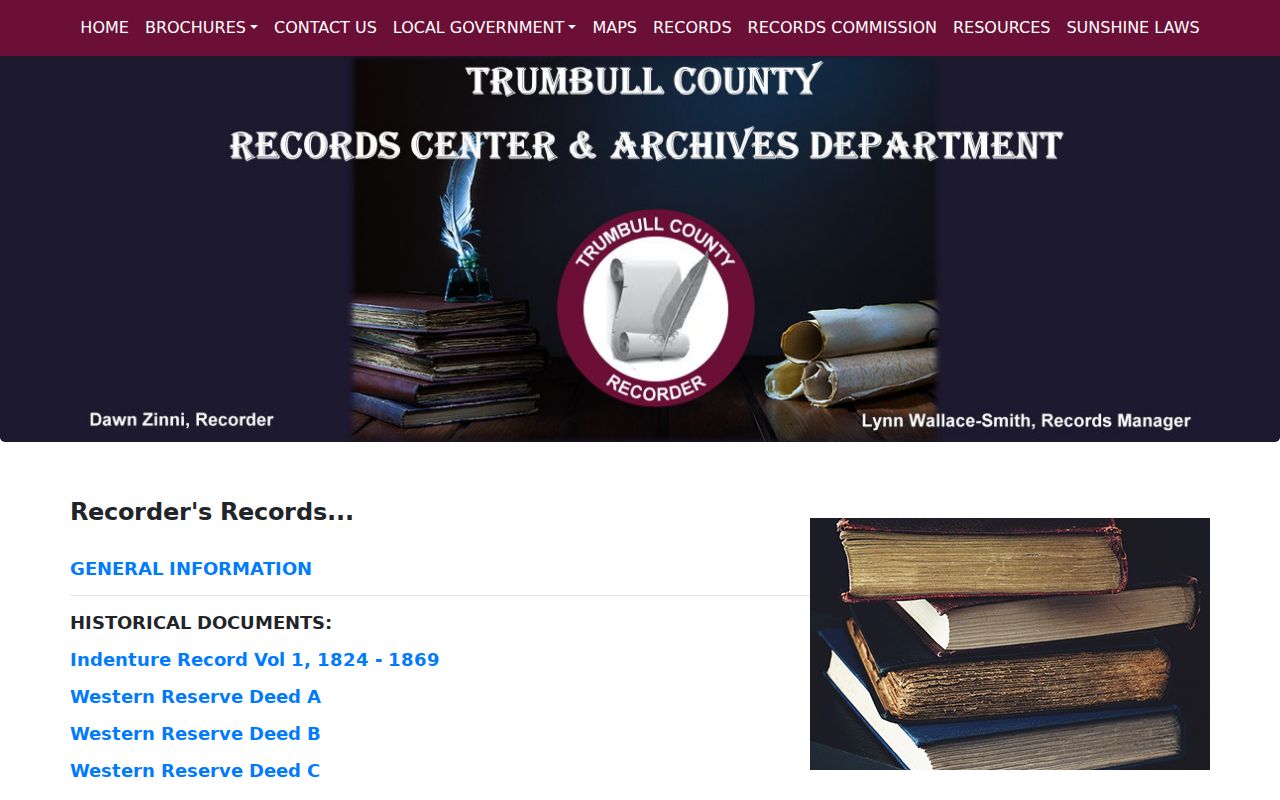
The Records Center began as a microfilming department and lists material such as Indenture Record Volume 1, Western Reserve deed material, maps, clerk records, and naturalization indexes. Its availability is series-specific, so ask for a defined book, file type, or period rather than a broad search for past residents.
Follow a Trumbull County Deed Chain Backward
Tracing previous residents through a Trumbull County deed chain starts with a property, not a surname. The Auditor Property Search advertises Parcel, Owner, and Address entry. It supplies the bridge the Recorder needs: the parcel or PIN, exact situs address, legal description, subdivision or lot, deeded owner, distinct owner-mailing fields, and deed or instrument reference. A situs address identifies where the property is located. A mailing address identifies where tax mail goes, and it should not be treated as proof of residence.
- Search the current address, owner, or parcel in the Auditor system. Preserve the parcel identifier, situs string, legal description, owner, and recorded-deed reference.
- Open the referenced document in PAXWorld or search the current owner as a party. Read the parties, roles, date, instrument type, and legal description.
- Identify the seller. Search that seller as a grantee in an earlier period to find the deed by which that person acquired the same property.
- Compare the lot, subdivision, and legal description at every step. A shared surname alone does not prove the same tract.
- Repeat the process backward. When the web interface cannot supply the document, use the Recorder counter, Archives, or FamilySearch images.
- Grantor / grantee
- The grantor transfers an interest in land. The grantee receives it in that recorded instrument.
- Chain of title
- A sequence of recorded transfers for one property, read from the current transfer toward earlier ones.
- Legal description
- The lot, subdivision, metes, or other formal land description. It remains more dependable than a changing street label when testing an older deed.
- Instrument
- A recorded document, such as a deed, mortgage, plat, easement, or land contract, identified by its recording reference.
Trumbull County Address Continuity Clues
Older addresses need local context before they can be attached to previous residents. WTCPL's digitized resources include the 1918 Atlas of the Ten Lower Townships of Trumbull County, Ohio, with Warren street and industrial mapping plus plates for several townships and communities. The 1899 county atlas is a freeholder directory and land-context source, not a household directory. A legal description, plat, or subdivision term can connect either map resource back to a present parcel.
Warren Sanborn material gives a second way to bracket a structure or block. Library of Congress lists online Warren maps for 1884, 1889, 1893, 1898, 1902, 1908, and 1915; a 1922 map is cataloged as 95 sheets but is not online. A map can show when a structure or place appears or changes. It cannot name every occupant, so pair it with a deed, directory, or census before assigning people to the address.
There is a documented local warning against assuming a countywide renumbering. A Trumbull Memory record about Tod Avenue notes a 1900-01 address later expressed as 245 Tod Avenue. Treat that as an individual continuity clue and confirm other streets through maps, plats, directories, or the parcel history.
Note: Keep the address exactly as printed in each source, including community or township, before deciding that two house numbers describe one property.
Trumbull County Previous Residents in Archives
The Trumbull County Archives record guide is a useful route when a title chain meets a court, probate, or historical gap. Its collections include court journals and records beginning in 1808, with different file types, dockets, and indexes starting and ending in different years. That timing matters. The 1895 courthouse fire is documented, but the county history does not say every older record was lost, and Recorder material still reaches deeply into county history.
The FamilySearch Ohio, Trumbull County Records collection lists 788,995 browsable images from the courthouse in Warren, spanning 1795-2010. Browsable does not mean fully name-indexed. Use a date, record category, book reference, party name, or legal description from the Recorder to narrow the browse path. It can be a better historical fallback than a general web search when the document is known but not surfaced online.
The FamilySearch collection is shown in this county-records source image.
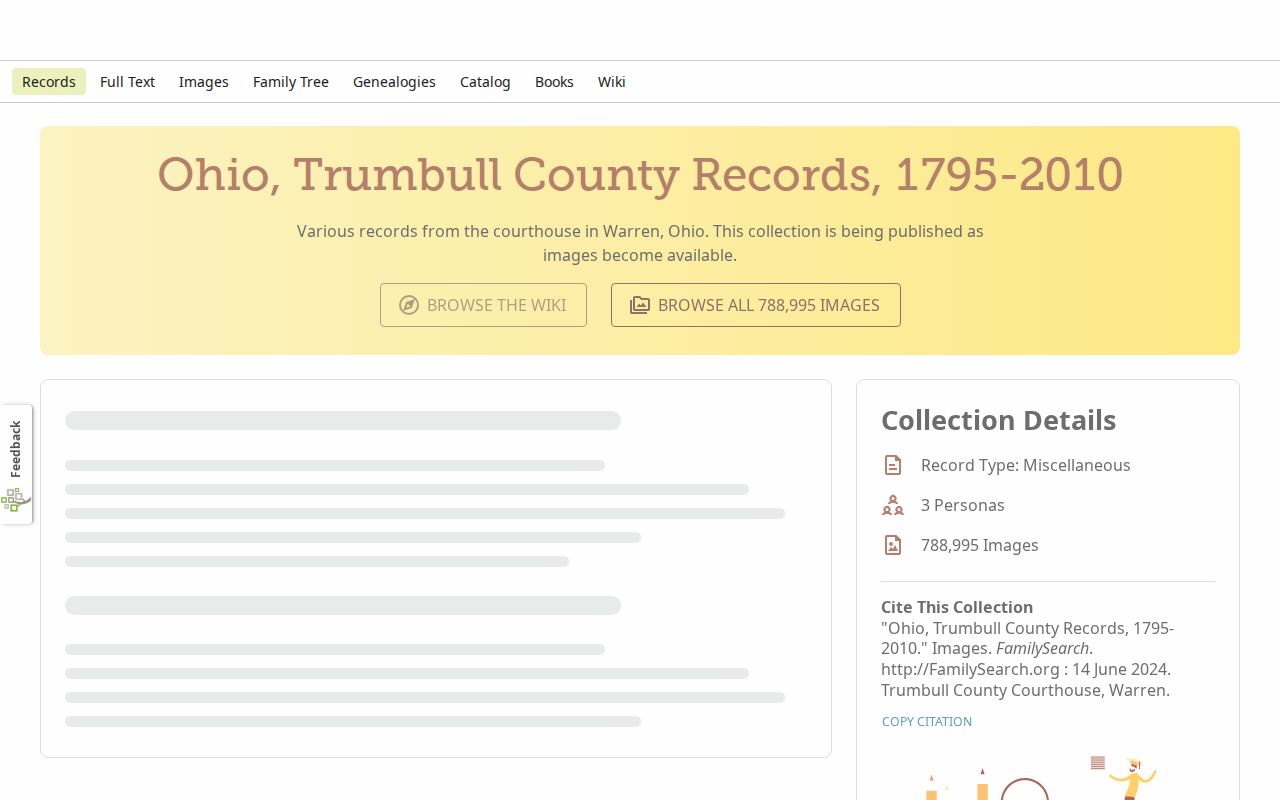
Use the image collection to inspect historic county material after the deed reference or an archive citation supplies a focused starting point. It supports the property trail; it does not replace checking a current parcel or a live household list.
Trumbull County Courthouse Records Context
Trumbull County was founded in 1800, with Warren as its seat of justice. That history helps explain why Recorder, Clerk, Probate, courthouse, and archival paths meet in Warren. The present courthouse is the third one on the square. The county's Common Pleas history records that the second courthouse burned on March 25, 1895, followed by temporary use of the Packard Block and the present building's completion in 1897.
The fire is a reason to verify a specific record series, not to write off all early evidence. County history does not identify every series that may have been lost, while the Recorder describes material reaching 1795 and the Records Center preserves microfilmed and archival material. The Records Center began as a microfilming department in 1954. When a prior-owner trail breaks near this period, ask the archive or Recorder about the particular book, docket, or record class rather than assuming a single countywide loss.
Match Trumbull County Past Households
Ownership is only one half of a previous-resident search. The documented Burch directories combine Warren with nearby communities in changing editions, while later Polk titles are Warren-specific. The 1997 Youngstown-Warren-Niles City and Suburban Criss + Cross Directory is the verified reverse format, taking an address to a listed occupant. Use the regional title that fits the place and year. The holdings and how to read them in depth belong in the Trumbull County city directory collections, while the present-day parcel path is covered by the street record search.
- Choose the nearest verified directory year for the address and community. Record the publication title, date, spelling, and listed street form.
- Check the prior or next edition in the same sequence. A change in name is a lead for more research, not proof that every person moved on the publication date.
- Pair the directory year with the nearest public federal census. Census schedules through 1950 can add household, age, birthplace, and family context.
- Use a Sanborn map, atlas, deed, or legal description to test whether the census or directory location fits the same tract or block.
Federal census schedules from 1850 through 1950 generally list household members, but address precision varies by enumeration. Pre-1850 schedules usually name only the household head. That is why directories and maps matter when the goal is to know who lived here before rather than simply to identify a family in the county.
Close a Trumbull County Address Trail
When a former owner or listed occupant disappears from the record trail, the WTCPL obituary index can supply a date, relatives, or a locality lead. The online Warren Tribune Chronicle index covers 1961-2025, with earlier online PDF runs and printed resources for broader periods. Search the surname used at death and, when useful, a maiden or prior married form. The index convention is local: an all-caps surname reflects the surname used at death, while mixed case can mark a maiden or earlier married surname printed in the notice.
A Trumbull County Archives source also illustrates the historical court-record channels that may help explain a transfer or family change.
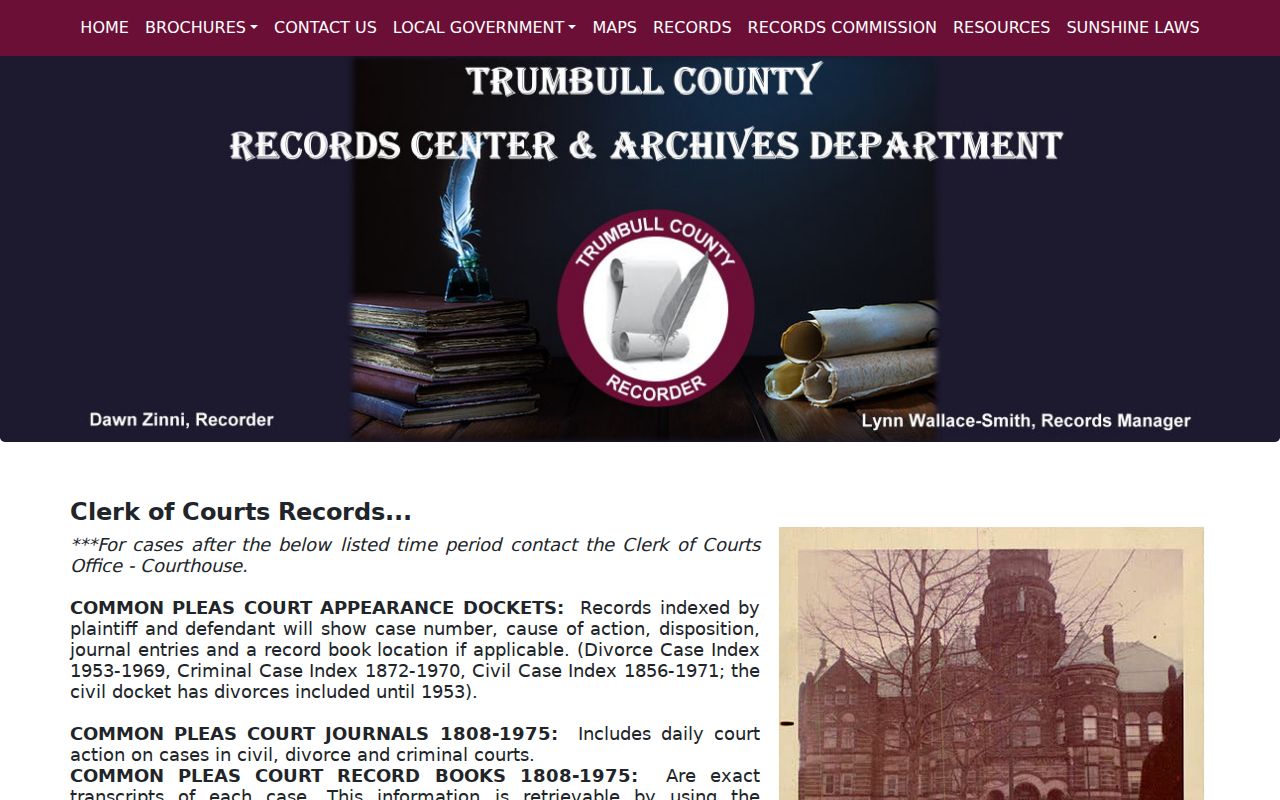
Request a cited obituary from WTCPL with a death date and limited, targeted citations. Named relatives can then be checked in Probate and against estate-related recorded transfers. A notice is evidence to test with the dated records, not a substitute for them.
Lawful house history. Trumbull County previous-resident research fits family history, estate questions, and property curiosity. Respect protected addresses and personal boundaries, and never use historic or current record clues to track, threaten, or harass a living person.
Note: The Recorder is currently scanning archive indexes and books, so preserve instrument and legal identifiers if an older search display changes.